
How Brands Unlock 85% Accurate Insights With No-Code Uber Eats API Scraper for Menu Data Analysis?
Introduction
Food delivery platforms have transformed the way customers compare meals, prices, and restaurant options within seconds. For brands, restaurants, and food intelligence firms, this creates a massive opportunity to analyze real-world market patterns. That’s why businesses are increasingly turning to Uber Eats Pricing Data Scraping to access structured insights for competitive decision-making.
Menu changes happen more frequently than many realize. Research indicates that food delivery prices can fluctuate by 10%–25% depending on promotions, time-based availability, and demand surges. In fast-moving cities, restaurant listings may update multiple times per day, making traditional tracking methods unreliable.
Using a No-Code Uber Eats API Scraper for Menu Data enables businesses to collect accurate, structured information without depending on complex technical development. Brands that analyze Uber Eats menu-level trends can detect early signals of consumer demand, spot popular cuisines, and measure competitive changes. With scalable menu intelligence, decision-making becomes data-driven instead of assumption-based.
Eliminating Restaurant Listing Gaps Across Multiple Locations
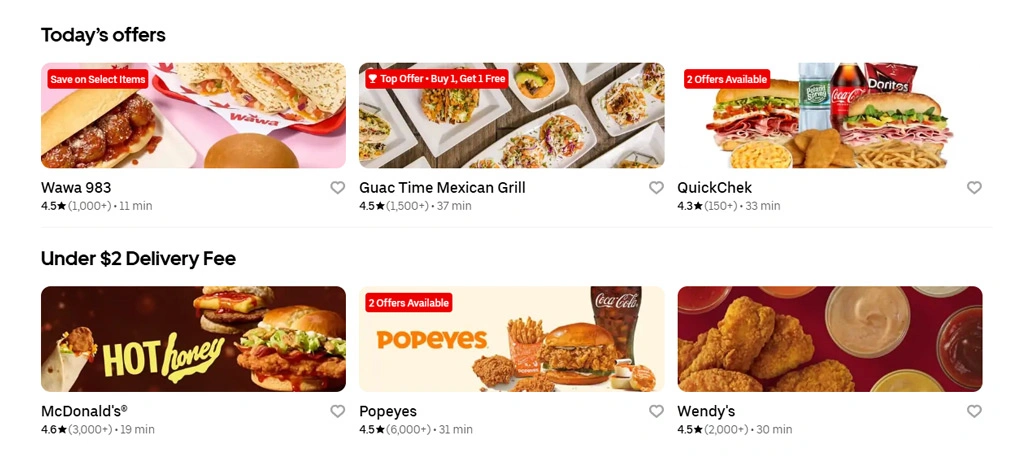
Restaurants frequently update menus, pause items, or adjust availability due to supply shortages, demand spikes, or limited-time offers. For brands and analysts, these rapid shifts create major visibility gaps, especially when tracking hundreds of outlets across different regions.
Research indicates that nearly 35% of restaurant listings change availability every week, which makes inconsistent tracking a real operational issue. Using the No-Code Uber Eats API Scraper Tool, businesses can standardize restaurant-level monitoring and convert scattered listings into structured datasets.
This approach also supports No-Code Uber Eats Restaurant Data Extraction, making it easier to identify restaurant name variations, missing categories, or newly added menu sections. Instead of collecting random snapshots, brands can build a reliable dataset that supports forecasting and reporting accuracy.
| Business Issue | Manual Monitoring Impact | Data-Driven Solution | Outcome |
|---|---|---|---|
| Menu item availability changes | Missed updates | Structured extraction | Better accuracy |
| Inconsistent restaurant listings | Confusing data | Standard formatting | Reliable reporting |
| Missing menu categories | Delayed discovery | Continuous monitoring | Complete coverage |
| City-wide scaling limitations | High labor cost | Automated refresh | Scalable insights |
Businesses that track these updates systematically often see up to 20% improvement in operational decision-making accuracy because they act on current data rather than outdated information.
Managing Frequent Pricing Shifts With Structured Monitoring
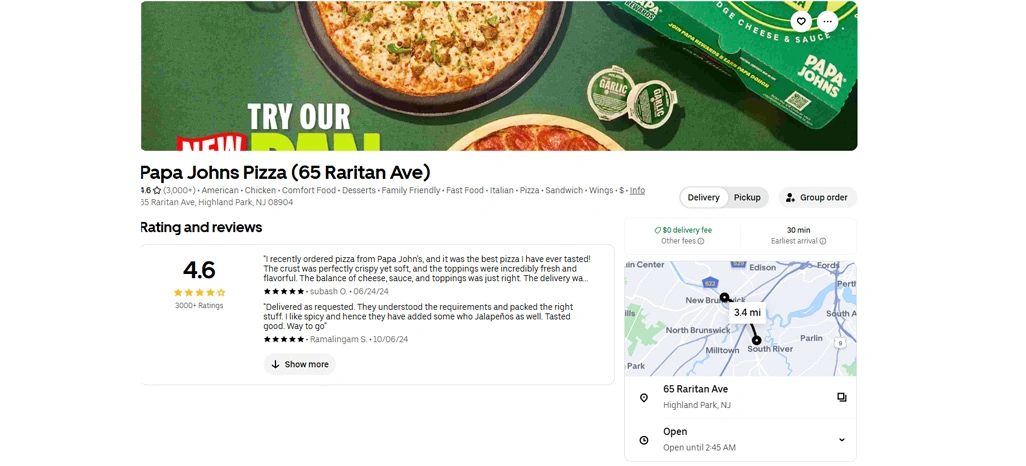
Pricing changes in food delivery platforms are far more frequent than most businesses expect. Restaurants adjust costs based on local demand, peak ordering hours, promotions, and delivery-based pricing strategies. These fluctuations create confusion for brands that rely on outdated competitive benchmarks.
To solve this challenge, businesses increasingly adopt systems that can Track Uber Eats Menu Price Changes in Real Time, ensuring their pricing strategy is based on current market conditions. Instead of checking listings manually, brands can store item-level price history and detect patterns tied to discounts and seasonal campaigns.
By implementing automated workflows, teams can also Collect Uber Eats Menu and Pricing Data across multiple cities, cuisines, and restaurant segments. This makes it possible to compare competitors more effectively, understand category-level pricing averages, and measure how often restaurants adjust item costs.
| Data Captured | Market Insight Provided | Business Advantage |
|---|---|---|
| Item-level pricing history | Price increase patterns | Better planning |
| Discount and promo tracking | Campaign frequency | Smarter offers |
| Regional pricing differences | City-level comparison | Improved targeting |
| Cuisine-based benchmarks | Average category pricing | Competitive analysis |
With structured reporting, companies improve pricing response time by nearly 40%, enabling faster adjustments to competitive moves. Data-driven pricing intelligence also strengthens forecasting models and reduces revenue leakage caused by slow market reaction.
Converting Restaurant Activity Into Market Strategy Insights
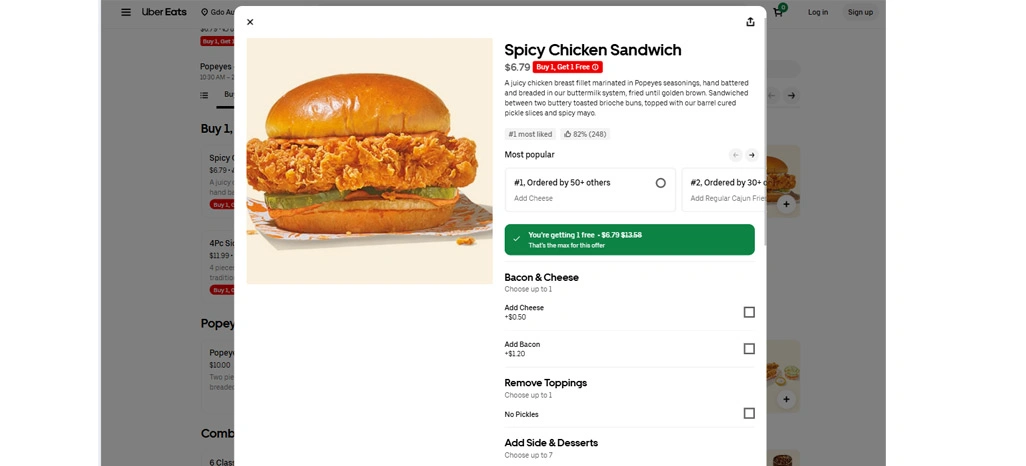
Food delivery competition is shaped by constant restaurant activity, including new menu launches, promotional bundles, and pricing adjustments. Customers often choose restaurants based on variety and affordability rather than loyalty, making competitive shifts extremely rapid.
Industry observations show that nearly 60% of customers select a restaurant based on pricing and menu diversity. For this reason, companies increasingly rely on scalable restaurant intelligence methods such as No-Code Uber Eats API Scraper Without Coding, which enables structured data collection without engineering dependency.
Through restaurant monitoring, brands can develop Restaurant Price Intelligence Using Uber Eats Data, helping them compare category pricing, measure competitor positioning, and identify which cuisines dominate specific neighborhoods. These insights become essential for cloud kitchens, restaurant chains, and delivery aggregators planning expansion.
| Insight Category | Information Captured | Strategic Benefit |
|---|---|---|
| Cuisine demand trends | Category popularity by area | Expansion planning |
| Popular menu positioning | Item listing frequency | Product planning |
| Competitor promotion cycles | Discount timing | Faster response |
| Restaurant activity updates | New openings or closures | Risk reduction |
Businesses that apply structured analytics often achieve 25% stronger market planning accuracy because they validate decisions using real restaurant activity instead of assumptions.
How Retail Scrape Can Help You?
We solve this by offering scalable data solutions that support structured market analysis through the No-Code Uber Eats API Scraper for Menu Data, helping businesses monitor thousands of restaurant listings efficiently.
What we helps you achieve:
- Monitor restaurant menu changes across multiple regions.
- Detects new item launches and discontinued listings quickly.
- Compare pricing patterns across locations and cuisines.
- Build structured datasets for business intelligence workflows.
- Reduce manual research workload and reporting delays.
- Improve forecasting accuracy using refreshed delivery insights.
We also support businesses seeking How to Scrape Uber Eats Data Without Programming by enabling a streamlined no-code data workflow. Our approach is built for food brands, analytics firms, and aggregators seeking reliable data delivery without the hassle of developing and maintaining their own infrastructure—powered by the No-Code Uber Eats Scraper for faster and smarter extraction.
Conclusion
Modern food delivery markets demand faster insights than traditional research methods can provide. By using a No-Code Uber Eats API Scraper for Menu Data, brands can track menu availability, pricing variations, and restaurant activity with structured accuracy that supports smarter forecasting and competitive planning.
For businesses aiming to transform food delivery intelligence into measurable strategy, Uber Eats Menu & Pricing Data Scraper No-Code solutions provide the right foundation for real-time reporting and scalable market monitoring. Contact Retail Scrape today to build your customized data pipeline and turn menu intelligence into business-ready decisions.