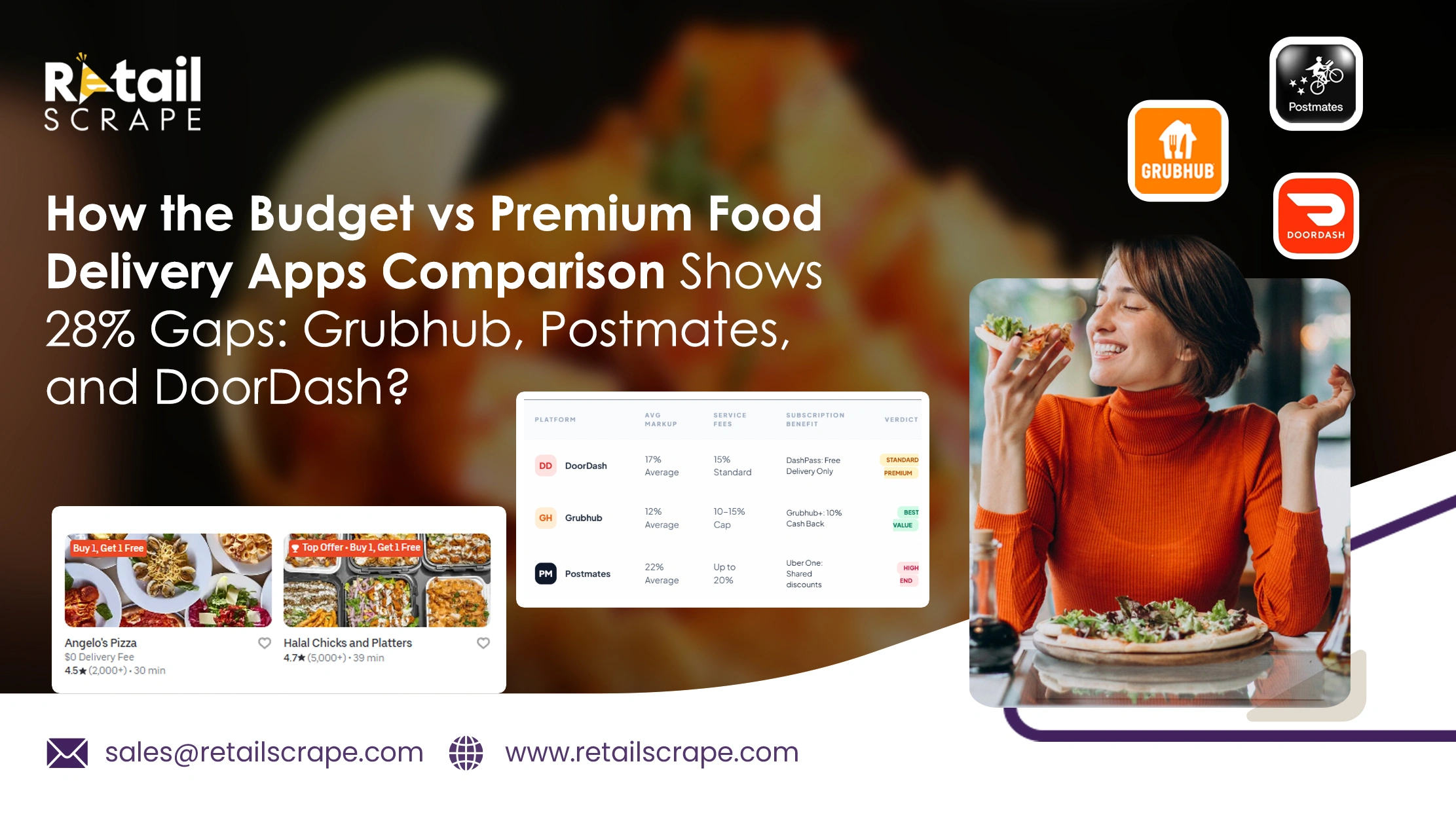
How the Budget vs Premium Food Delivery Apps Comparison Shows 28% Gaps: Grubhub, Postmates, and DoorDash?
Introduction
Food delivery has become a daily habit for many people, but the real question is whether you’re paying for convenience or simply overpaying without noticing. Today’s delivery platforms often appear similar on the surface, yet their pricing structures, service fees, and surge adjustments can create significant differences in what customers actually pay at checkout.
This is where Food Data Scraping becomes valuable for analyzing patterns across thousands of restaurant listings, fee changes, and checkout totals. By tracking these numbers, businesses and customers can clearly see which platforms consistently charge more and which ones offer better value.
A proper Budget vs Premium Food Delivery Apps Comparison is no longer just about picking the cheapest option. It is about understanding fee transparency, order minimums, membership perks, and delivery speed expectations. This blog breaks down how Grubhub, Postmates, and DoorDash compare, and why these differences create measurable pricing gaps for users.
Understanding Checkout Differences Beyond Menu Pricing
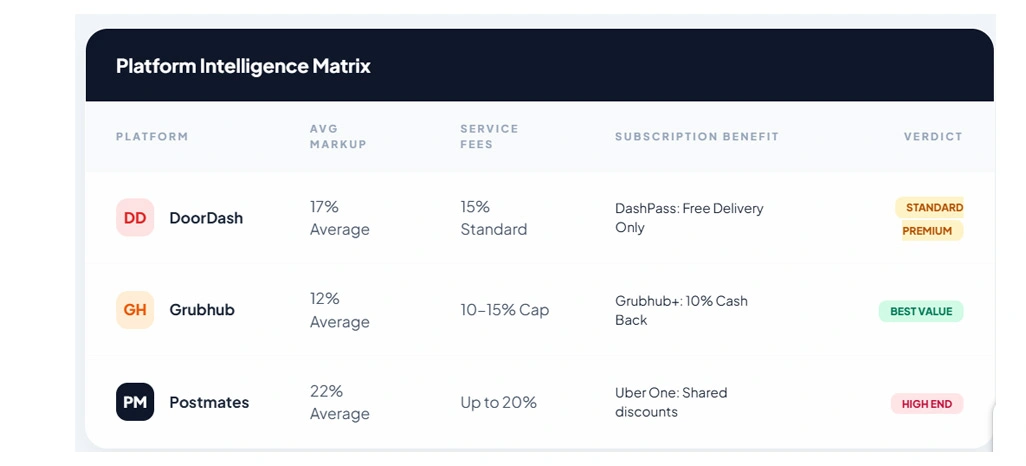
Many users assume menu pricing is the only cost factor, but the final checkout total often tells a completely different story. A detailed Grubhub Postmates Doordash Price Comparison reveals that service fees, delivery charges, and small-order penalties can quickly widen the gap between platforms.
For customers wondering Which Food Delivery App Is Cheaper Grubhub or Doordash or Postmates, the answer depends heavily on order size. Smaller baskets are impacted more by fixed platform charges, while larger orders reduce the percentage impact of delivery-related fees.
This cost difference also influences restaurant performance because customers tend to abandon carts when fees appear unexpectedly at checkout. Understanding these pricing gaps is essential for both consumers and restaurant operators who want better forecasting.
Sample Checkout Cost Breakdown (Order Value: $25):
| Platform | Delivery Fee | Service Fee | Extra Charges | Total Checkout |
|---|---|---|---|---|
| Grubhub | $3.49 | $4.10 | $1.20 | $33.79 |
| DoorDash | $4.29 | $4.85 | $0.95 | $36.09 |
| Postmates | $3.99 | $5.10 | $1.45 | $37.54 |
This comparison shows why true pricing evaluation requires tracking the full checkout experience rather than only food totals. In multiple U.S. metro areas, DoorDash often adds higher service fees during peak hours, while Grubhub may include restaurant-level markups.
Why Platform Fee Models Impact Spending?
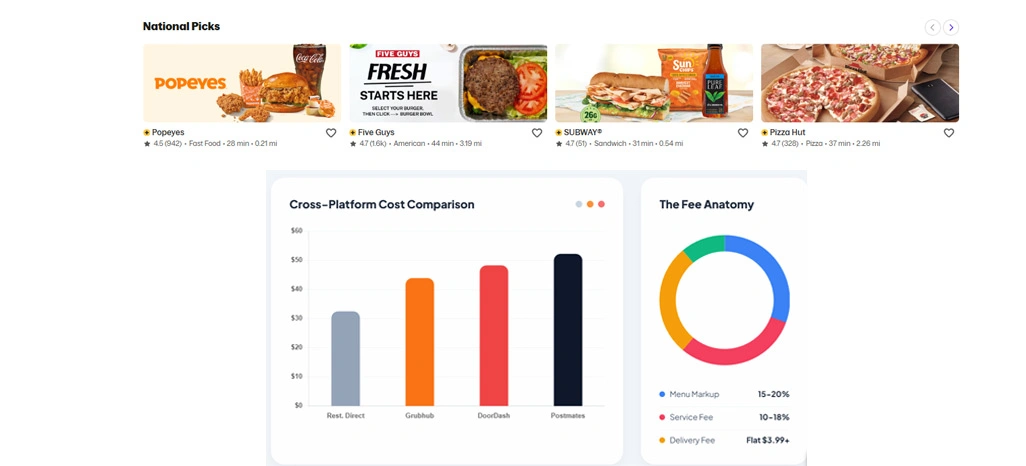
Delivery apps apply different fee models, and these structures directly affect what customers pay. Some platforms use flat delivery rates, while others calculate costs based on distance, time, and order value. That is why understanding How Delivery Fees Vary Across Food Delivery Platforms is critical for evaluating real affordability. DoorDash often applies distance-based fees and expanded range surcharges.
Retail datasets are also improving because retailers are investing in structured product feeds. Many analysts highlight How Tesco Shares Real-Time Grocery Data as a major step toward better inventory visibility across locations. Similarly, How Aldi Provides Product Data via API shows how simplified product endpoints can support fast listing updates and more accurate stock status reporting.
Another key reason behind rising checkout totals is Dynamic Pricing Food Delivery, where platforms adjust delivery charges in real-time based on driver availability and order volume. These differences highlight how platform fee design drives real customer spending patterns beyond simple delivery pricing.
This inconsistency also impacts consumer loyalty. Users often switch between apps depending on which one offers lower fees at the moment. For restaurants, these fee fluctuations influence demand surges and order distribution across platforms, making sales forecasting harder.
Key Fee Structure Differences Across Apps:
| Fee Type | Grubhub | DoorDash | Postmates |
|---|---|---|---|
| Delivery Fee | Mostly flat range | Distance + demand-based | Highly variable |
| Service Fee | Medium | High in peak hours | Often highest |
| Small Order Fee | Common | Common | Common |
| Surge Charges | Less frequent | Frequent | Very frequent |
| Subscription Impact | Strong discounts | Strong discounts | Limited savings |
Data-based monitoring in 2025 showed that weekend dinner hours triggered fee spikes of 20% to 25% in many urban regions. These changes make pricing unpredictable for customers who order frequently at similar times.
Measuring Convenience Costs and Service Value
Food delivery decisions are rarely based only on price. Many customers pay more because they value faster delivery, better order tracking, and wider restaurant availability. That is why identifying the Best Food Delivery App for Value vs Convenience depends on both service quality and total checkout cost.
The best way to evaluate these differences is to Compare Grubhub Postmates and Doordash Pricing while also measuring service features that influence customer behavior. Research from 2025 ordering patterns showed premium-focused users placed nearly 18% more monthly orders because convenience encouraged repeat usage.
To track these patterns accurately, many analysts rely on Real-Time Food Delivery Price Comparison Using Web Scraping, which captures live changes in menu pricing, delivery fees, and availability shifts across multiple regions. This method highlights how apps influence user behavior through priority delivery options, express checkout, and time-based promotions.
Convenience vs Pricing Performance Snapshot:
| Factor | Grubhub | DoorDash | Postmates |
|---|---|---|---|
| Pricing Stability | Medium | Medium | Low |
| Delivery Speed | Medium | High | Medium |
| Restaurant Availability | High | High | Medium |
| Menu Markups | Medium | Medium | High |
| User Preference Driver | Variety | Speed | Flexibility |
DoorDash is often preferred for speed and driver coverage. Grubhub performs strongly in restaurant variety and stable ordering experience. Postmates offers flexibility for mixed deliveries but can become costly due to inconsistent fees and markups.
How Retail Scrape Can Help You?
With a detailed Budget vs Premium Food Delivery Apps Comparison, brands can track platform-level pricing differences, identify consistent fee patterns, and measure regional variations across multiple restaurant categories.
We Supports Your Strategy With:
- Automated collection of menu and checkout pricing data.
- Multi-city delivery fee tracking for better regional insights.
- Competitor benchmarking across major delivery apps.
- Restaurant markup identification across platforms.
- Trend-based analytics for demand forecasting.
- Structured reporting for decision-making and planning.
We help organizations generate data-driven insights through structured monitoring, powered by our Food Scraping API for smarter and faster decision-making.
Conclusion
When consumers look closely at the real checkout totals, it becomes clear that a proper Budget vs Premium Food Delivery Apps Comparison is essential for avoiding hidden costs. Grubhub, DoorDash, and Postmates each offer unique strengths, but the pricing gap is not minor—it can reach 28% depending on timing, order size, and location.
At the same time, answering Which Food Delivery App Is Cheaper Grubhub or Doordash or Postmates requires more than checking delivery fees alone, because service charges and menu markups often decide the final cost. Contact Retail Scrape today to build a smarter data strategy.