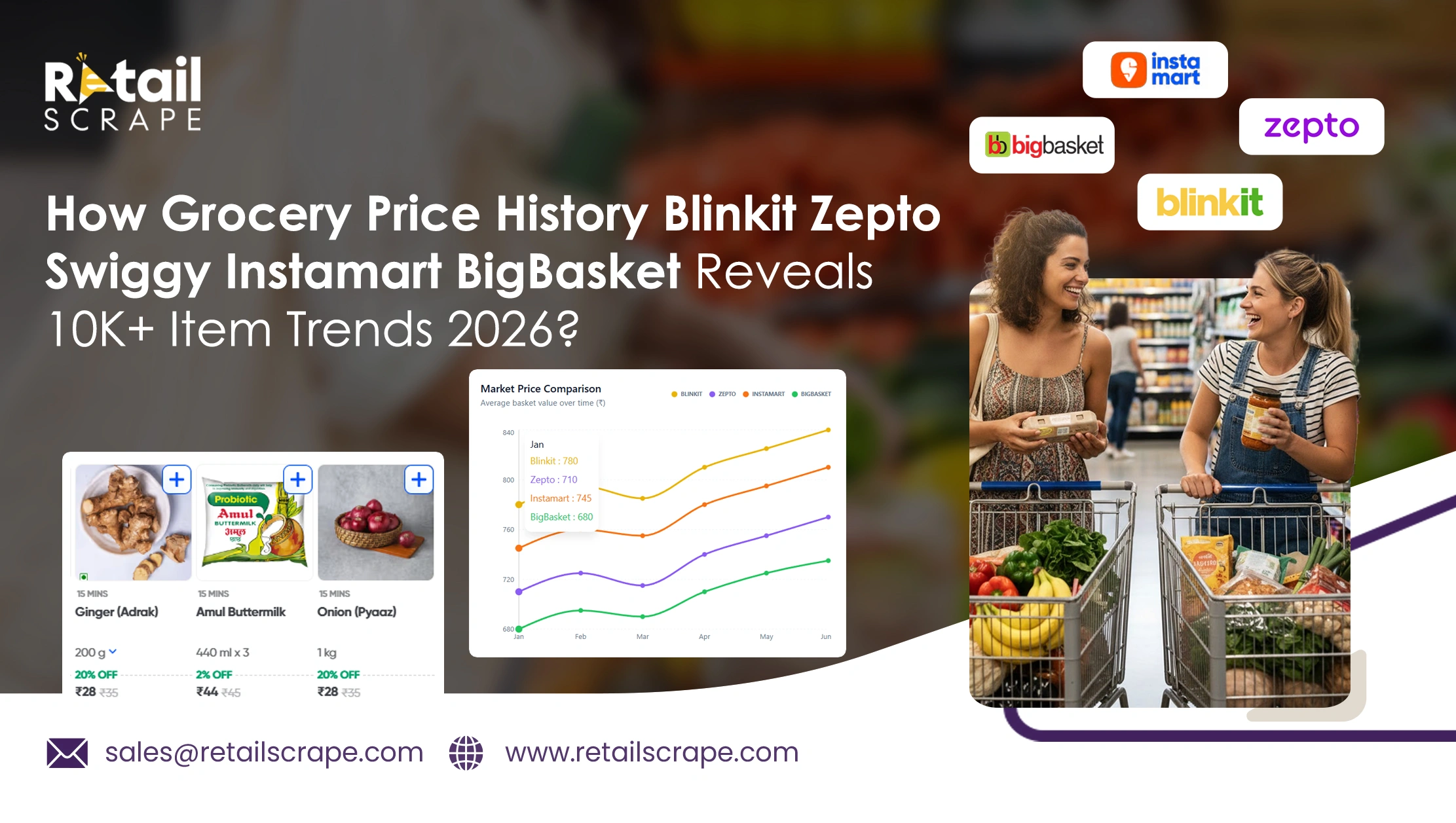
How Grocery Price History Blinkit Zepto Swiggy Instamart BigBasket Reveals 10K+ Item Trends 2026?
Introduction
India’s quick commerce and online grocery ecosystem is no longer limited to convenience—it has become a daily pricing battlefield. From morning milk and bread to weekend snack bundles, prices shift rapidly due to demand surges, delivery availability, dark store stock, and competitor price matching. This is why analyzing grocery price history has become essential for brands, retailers, and analysts trying to understand real market movement instead of relying on assumptions.
In 2026, grocery platforms are expected to list and rotate over 10,000+ active SKUs across categories like dairy, personal care, packaged food, beverages, and household essentials. A detailed study of Grocery Price History Blinkit Zepto Swiggy Instamart BigBasket helps businesses identify repeated discount cycles, sudden inflation spikes, and long-term pricing behavior across multiple cities.
More importantly, pricing is no longer static even within the same day. With Dynamic Pricing Analysis of Swiggy Instamart Groceries, companies can track hourly changes and understand how hyperlocal supply chain decisions influence customer purchase behavior. When pricing becomes real-time, historical tracking becomes the most reliable competitive advantage for decision-making.
Understanding Item-Level Inflation Through Historical Cycles
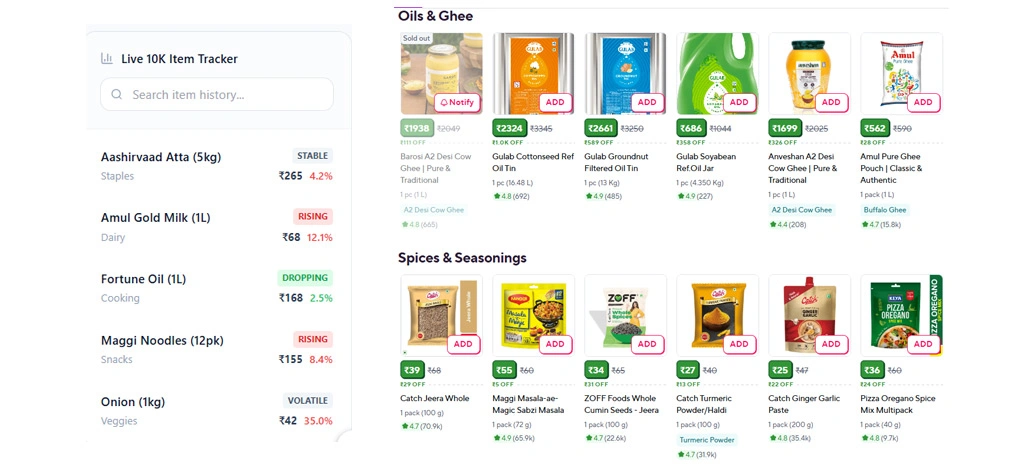
Many grocery brands struggle to predict price changes because they only focus on current-day offers. However, real insights come from observing how product prices behave over weeks and months. In 2026, several grocery analytics reports suggest that packaged food, dairy, and home essentials often show 6% to 18% variation depending on seasonality, warehouse stock pressure, and festival demand.
This is where Track Grocery Price Changes Over Time Using Web Scraping becomes extremely valuable. Instead of collecting random pricing snapshots, companies can maintain structured records of daily and weekly pricing changes. This approach helps detect repeated patterns like “price spike + short discount drop” cycles, especially for fast-moving items such as snacks, cereals, and cooking oils.
Additionally, having Complete Grocery Price History Across Apps ensures businesses can compare item-level pricing stability across multiple delivery platforms. This also supports identifying whether certain platforms inflate prices more frequently for specific categories.
Sample Category-Level Price Shifts (2026):
| Category | Avg Price Change (30 Days) | Change Frequency | Common Trigger |
|---|---|---|---|
| Dairy Products | 5% to 9% | High | Demand surge |
| Packaged Snacks | 8% to 15% | Very High | Promotions |
| Cooking Essentials | 10% to 18% | Medium | Supplier cost |
| Personal Care | 6% to 12% | High | Campaign offers |
| Cleaning Supplies | 7% to 13% | Medium | Seasonal demand |
Comparing Competitive Pricing Across Delivery Platforms
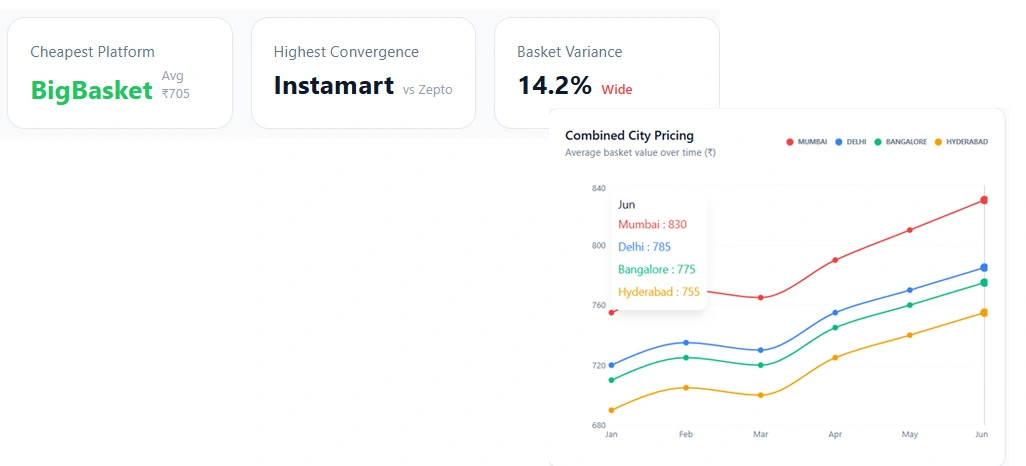
Competitive grocery pricing is no longer stable, as platforms constantly adjust product rates to win customer attention. A single item can appear at different prices across apps within hours, depending on delivery demand, stock availability, and competitor reactions. This creates a major challenge for brands that want to maintain pricing consistency and understand real market positioning.
With Real-Time Grocery Price Comparison Across Delivery Apps, brands can detect pricing gaps instantly and monitor which platform is driving category-level price drops. Research indicates that grocery price differences across major Indian cities can range from 4% to 22%, especially in snacks, beverages, and personal care products.
Having India Grocery Price History & Trend Analysis also helps suppliers identify which apps follow stable pricing behavior and which ones frequently trigger discount wars. This allows brands to decide where to run promotions, which platforms to prioritize for inventory supply, and when to launch seasonal campaigns for maximum conversion.
Sample Cross-Platform Price Comparison (Same SKU):
| Product Type | Platform A | Platform B | Platform C | Observed Pattern |
|---|---|---|---|---|
| Milk 1L | ₹62 | ₹60 | ₹63 | Mostly stable |
| Chips Pack | ₹35 | ₹30 | ₹34 | Discount-driven |
| Detergent 1kg | ₹115 | ₹118 | ₹110 | Competitive cut |
| Shampoo 180ml | ₹165 | ₹159 | ₹167 | Offer rotation |
| Bread Pack | ₹45 | ₹42 | ₹44 | Daily changes |
Measuring City-Based Pricing and Local Demand Shifts
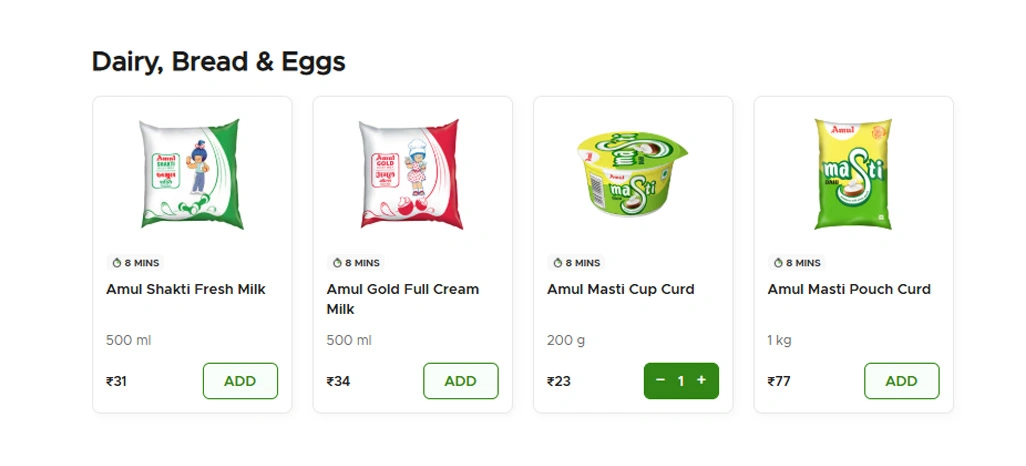
Hyperlocal pricing has become one of the biggest forces shaping grocery platform competition. The same product may show different prices depending on city, locality, and even delivery zone. This happens because pricing is influenced by warehouse coverage, order density, dark store supply, and peak-hour demand.
This is where Hyperlocal Grocery Price History by City becomes critical. Brands can evaluate how a product behaves differently in Mumbai versus Bengaluru, or even across two different zones of Delhi. Several market studies suggest that pincode-based pricing fluctuations can impact buying volume by up to 19% for essential items like milk, vegetables, and packaged food.
With Grocery Price Trend Analysis Using Scraped Data, businesses can identify whether price spikes are linked to demand surges, stock shortages, or platform-based promotion tactics. Additionally, Instamart Price Monitoring enables businesses to measure rapid changes during peak delivery hours.
City-Wise Hyperlocal Pricing Volatility Example:
| City | Price Variation Range | Peak Change Hours | Most Affected Category |
|---|---|---|---|
| Mumbai | 8% to 20% | 6 PM - 10 PM | Snacks & beverages |
| Bengaluru | 6% to 18% | 7 AM - 11 AM | Dairy & breakfast |
| Delhi | 7% to 22% | 5 PM - 9 PM | Personal care |
| Hyderabad | 5% to 16% | 8 PM - 11 PM | Packaged food |
| Pune | 6% to 19% | 12 PM - 3 PM | Household cleaning |
These hyperlocal insights also help brands evaluate Blinkit Price History, measure Zepto Grocery Price Trends, and maintain consistent BigBasket Price Tracking for high-demand items across India.
How Retail Scrape Can Help You?
Pricing trends in quick commerce are moving too fast for manual monitoring, and businesses need a reliable system that collects structured historical data. Companies can build automated dashboards that record Grocery Price History Blinkit Zepto Swiggy Instamart BigBasket across multiple categories, cities, and time intervals.
Key Support Areas Offered by us:
- Structured multi-platform item tracking with consistent output.
- City-wise pricing intelligence for better distribution decisions.
- Historical discount cycle monitoring for campaign planning.
- Product-level pricing alerts for competitor changes.
- Category-wise pricing volatility reporting for forecasting.
- Scalable reporting support for thousands of SKUs.
We ensure high-quality Grocery Data Scraping outputs that help businesses maintain pricing accuracy and track competitive movement without delays.
Conclusion
A structured view of Grocery Price History Blinkit Zepto Swiggy Instamart BigBasket helps businesses understand category-level pricing cycles, identify which platforms drive discount wars, and detect inflation patterns across high-demand items.
When companies maintain Complete Grocery Price History Across Apps, they can plan promotions smarter, align supplier negotiations better, and build stable pricing strategies based on real market movement instead of guesswork. Contact Retail Scrape today to start collecting grocery price history insights that support faster planning and stronger market positioning.