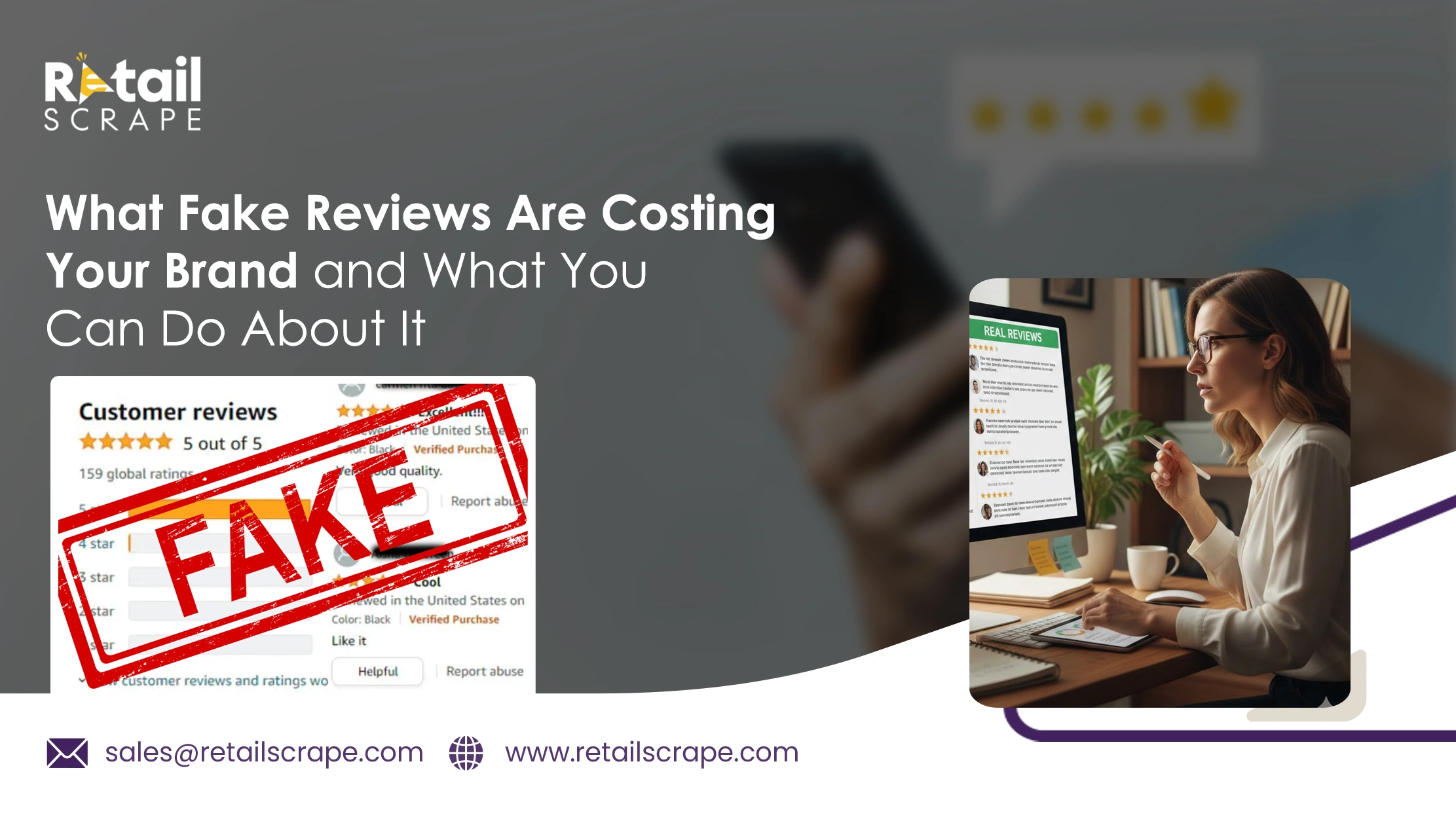
In the digital age, customer reviews are the modern word-of-mouth. They can make or break a brand’s success almost overnight. But while genuine reviews help businesses grow, fake reviews pose a serious threat to credibility and long-term customer trust. Thousands of brands worldwide are losing revenue, customer loyalty, and online authority due to the proliferation of misleading reviews.
In this article, we’ll explore how fake reviews affect brand reputation, why they’re so prevalent, and what you can do — including leveraging technologies like review data scraping and sentiment analysis — to identify and remove them effectively.To identify and combat fake reviews at scale, businesses increasingly rely on web scraping to collect and analyze large volumes of online review data across multiple platforms.
What Are Fake Reviews?
Fake reviews are testimonials or opinions posted about a product, service, or brand that are not from genuine customers. They include:
- Positive fake reviews - artificially boosting ratings
- Negative fake reviews - designed to sabotage competitors
- Paid reviews - written by incentivized individuals
- Bot-generated or fake account reviews - automated or fraudulent posts
Fake reviews are not just annoying — they distort the reality of customer experience and influence purchasing decisions based on misleading information.
Why Fake Reviews Are a Serious Problem
Trust Erosion
Customers trust online reviews as much as personal recommendations. Research indicates that 94% of consumers read reviews before buying and many make decisions based on average ratings. When fake reviews skew these ratings, customers lose trust not only in the individual product but in the entire brand.
Damaged Brand Reputation
Whether positive or negative, fake reviews damage credibility. Overly positive fake reviews lead to unrealistic expectations. Negative fake reviews can spread fear and doubt, reducing conversion rates and harming long-term loyalty.
Unfair Competitive Advantage
Competitors who use fake reviews to manipulate rankings gain an unfair advantage in search algorithms and review platforms, making it harder for honest brands to rank organically.
Legal and Platform Penalties
Platforms like Amazon, Google, Yelp, and TripAdvisor are increasingly penalizing businesses linked to fake review activities. Google may remove local listings; Amazon may suspend sellers — all based on review integrity violations.
Using a reliable web scraping API allows brands to automate review monitoring, detect suspicious patterns in real time, and maintain data accuracy without manual effort.
How Fake Reviews Impact Consumer Behavior
People rely heavily on reviews:
- Positive reviews increase conversion rates
- Negative reviews decrease sales
- Reviews influence SEO and marketplace search rankings
Fake reviews influence search engine optimization (SEO) and marketplace algorithms. Higher average star ratings appear at the top of results, capturing more clicks. This means fake positive reviews can temporarily inflate visibility, while fake negative reviews bury a brand in search results.
A study by BrightLocal found that 73% of consumers only pay attention to reviews written in the last month. Fake reviews often flood platforms to dominate recent review impressions — a dangerous tactic that can mislead customers at scale.
The Cost of Fake Reviews
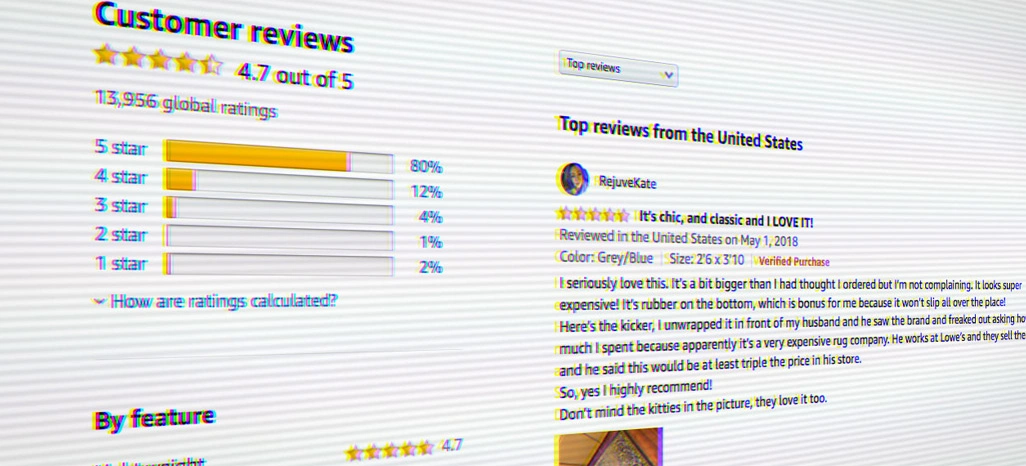
Fake reviews are not just ethical issues — they carry real business costs:
Lost Revenue
Consumers deterred by fake negative reviews may abandon a brand before purchase.
Increased Customer Support Issues
Fake positive reviews lead to unrealistic expectations and more returns, complaints, and negative word of mouth.
Marketing Waste
Money spent on advertising and onboarding new customers is wasted if potential buyers are discouraged by fraudulent reviews.
Access to structured Reviews data Scraping enables companies to uncover review manipulation, sentiment anomalies, and coordinated fake review campaigns that damage brand trust.
How to Detect Fake Reviews Using Technology
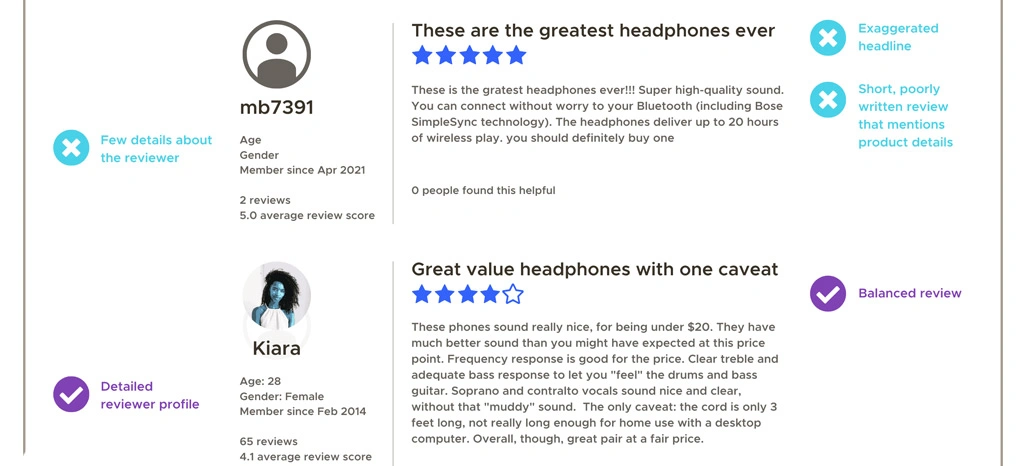
Identifying fake reviews manually is almost impossible at scale. That’s where technology tools help.
(a) Review Data Scraping
Using review data scraping techniques, brands can collect large volumes of user reviews from platforms like Amazon, Google Reviews, Yelp, TripAdvisor, etc. Once you scrape review data, it can be cleaned and analyzed to detect patterns associated with fraud.
Review data scraping allows you to:
- Aggregate all reviews for your products or services
- Identify unusual spikes in review volume
- Compare review posting times and patterns
(b) Scrape Review Data for Patterns
When you scrape review data, you’re not just collecting text — you’re collecting metadata like:
- Reviewer profiles
- Time of posting
- Rating distribution
- Review length and language patterns
These metadata points are gold mines for detecting anomalies. For example:
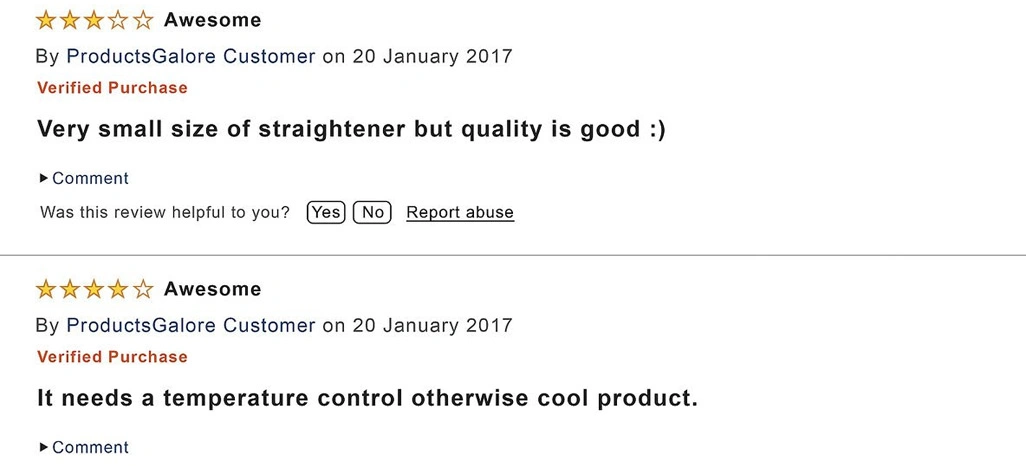
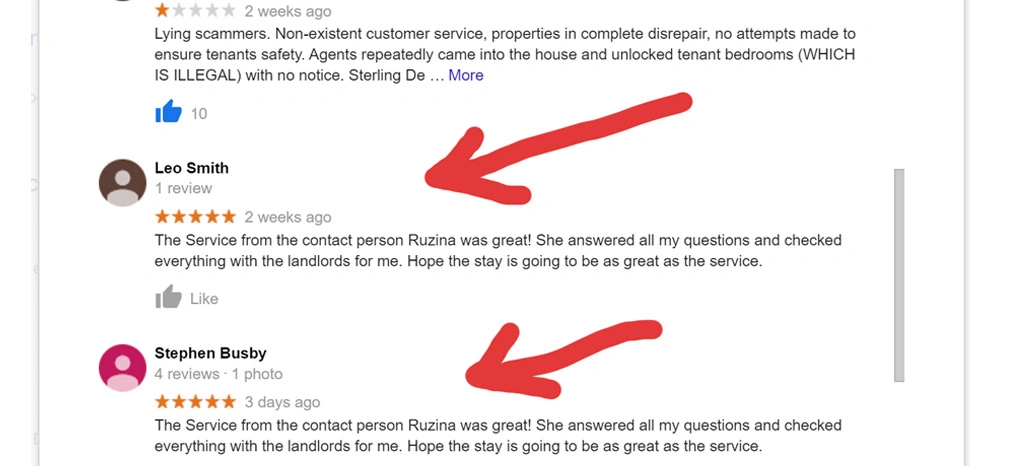
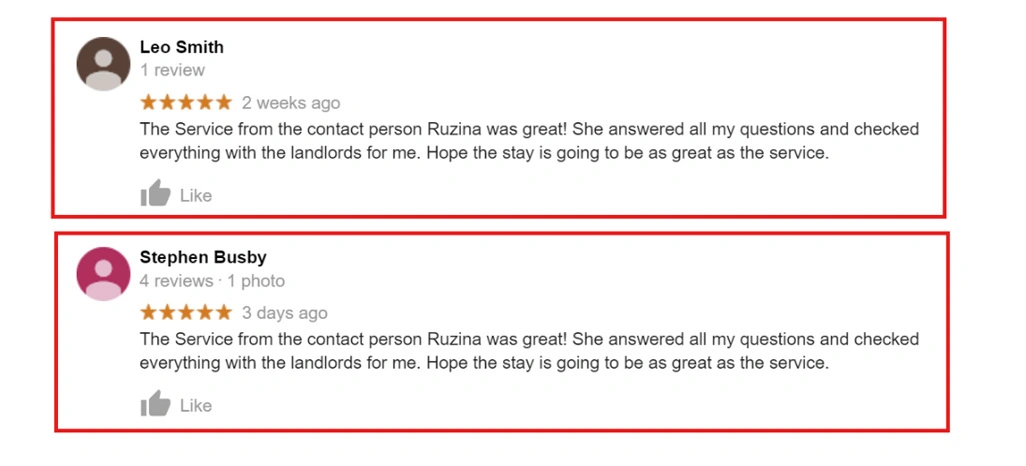
- Multiple 5-star reviews in a short time with similar language
- Reviews from users with no other activity
- Reviews with similar sentiment and repeated phrases
All these signs can indicate fake reviews.
(c) Sentiment Analysis
Once the data is collected, sentiment analysis helps in automatically categorizing reviews into positive, neutral, or negative sentiment. This process analyzes the emotional tone of review text.
Sentiment analysis can reveal:
- Highly similar wording across many reviews
- Abnormal positivity or negativity skew
- Patterns inconsistent with real customer sentiment
Together, review data scraping and sentiment analysis create a powerful fraud detection toolset.
Manual Signals of Fake Reviews
Technology isn’t the only way to spot fake reviews. Human review can help catch:
Repetitive Language
Fake reviews often use repetitive phrases like “Amazing product!” “Highly recommended!” without specific details.
Unrealistic Enthusiasm or Criticism
Reviews that are excessively glowing or harsh without context should raise suspicion.
Reviewer Profile Inspection
Check if reviewers have:
- No profile picture
- No other reviews
- Generic usernames
These markers often suggest low-effort accounts used to post fake reviews.
Steps to Remove Fake Reviews
After detecting fake reviews, your next goal is removal or suppression. Here’s how brands can act:
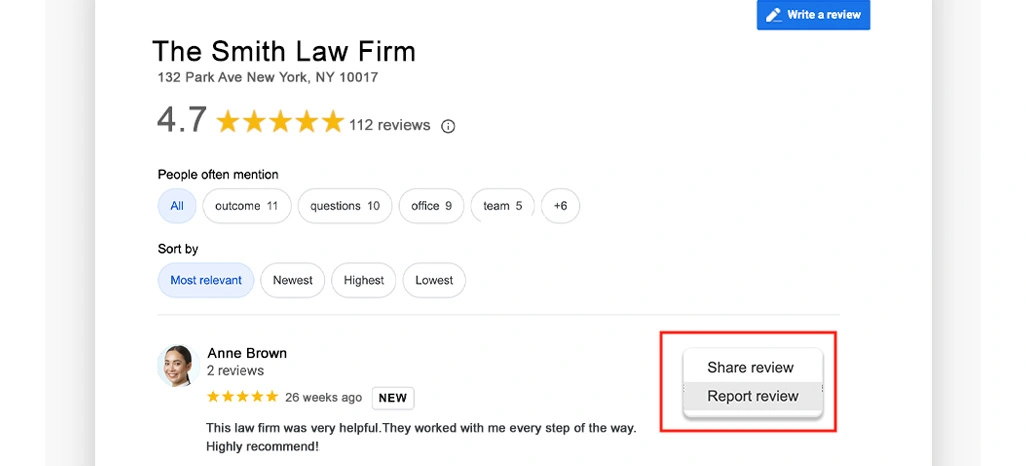
(a) Report to the Platform
Review platforms have mechanisms to report fraudulent reviews:
- Amazon: Seller Central report tool
- Google My Business: “Flag as inappropriate”
- Yelp: “Report review”
Provide as much evidence as possible — including patterns identified through review data scraping and sentiment analysis.
(b) Engage with Genuine Users
Respond publicly to questionable reviews. Even if they are fake, a professional reply shows prospective customers you’re attentive — which preserves trust.
Example reply to a fake negative review:
“We’re sorry you had a bad experience. We can’t find any evidence of your purchase. Please contact our support team so we can resolve this.”
This approach signals transparency and customer focus.
Beyond reputation management, clean and reliable review data also supports price optimization, helping brands adjust pricing strategies based on genuine customer sentiment rather than manipulated feedback.
(c) Build Authentic Review Volume
Request reviews from real customers after a purchase:
- Follow up with email requests
- Incentivize honest feedback (according to platform policy)
- Provide simple review links
The more authentic reviews you have, the less impact fake ones will have.
(d) Use Automated Tools
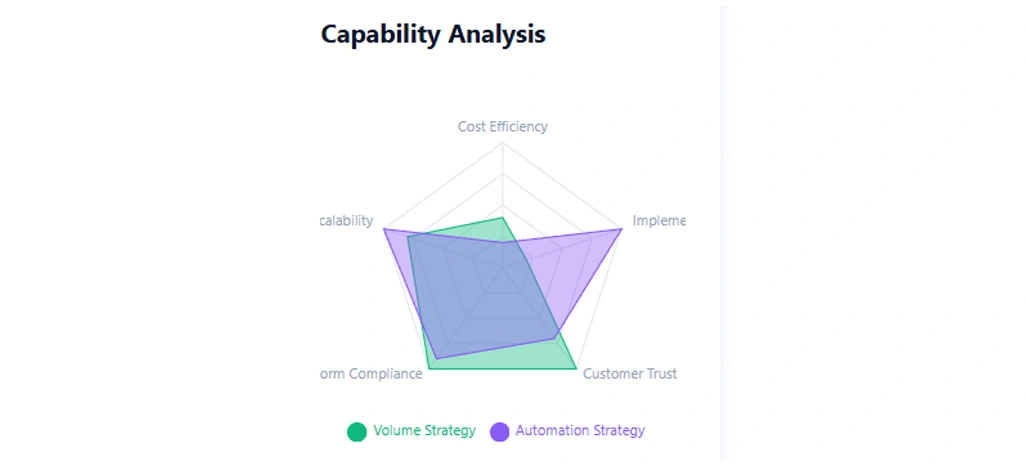
There are specialized tools that leverage review data scraping and sentiment analysis to continuously monitor reviews and alert you to potential fraud.
Examples include:
- Review monitoring dashboards
- AI-based fraudulent review detectors
- API connections to platforms for live data
Legal and Ethical Considerations
Posting fake reviews is illegal in many jurisdictions. Authorities like the FTC in the U.S. and similar bodies worldwide penalize deceptive practices.
Brands should always:
- Abide by review platform policies
- Avoid incentivizing fake reviews
- Be transparent with customers
Your reputation is more valuable than any short-term boost fake reviews might provide.
Leveraging Scrape Review Data for Competitive Insights

While review data scraping helps you fight fake reviews, it can also power business growth. By analyzing competitor reviews, you can:
- Uncover product weaknesses
- Identify customer complaints
- Spot unmet needs
- Develop better positioning
When you scrape review data across the industry, patterns emerge — showing what real customers value and dislike.
With sentiment analysis on competitor reviews, you can quantify emotional drivers behind customer opinions, and then adjust your messaging and product roadmap accordingly.
Building an Ongoing Review Monitoring Strategy
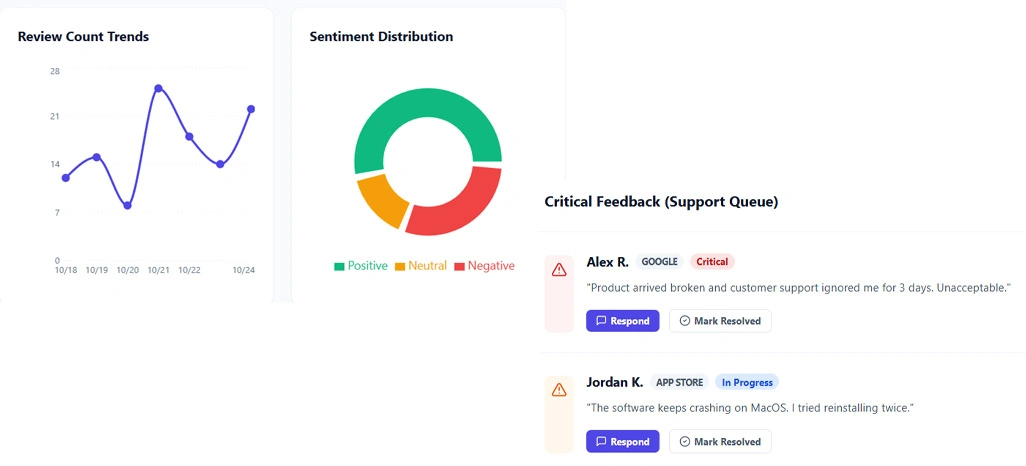
Detection and removal are just the start. A proactive review monitoring strategy includes:
(a) Scheduled Review Data Scraping
Set up continuous scraping workflows to collect new reviews daily or weekly.
(b) Real-Time Alerts
Use sentiment analysis engines to flag dramatic shifts in sentiment — especially sudden surges in negative reviews.
(c) KPI Dashboards
Track metrics like:
- Average star rating
- Review count trends
- Positive vs negative sentiment ratio
Dashboards help you visualize review impact on your business over time.
(d) Integrate with Customer Support
Feed flagged reviews into your support systems so your team can prioritize real complaints faster.
Case Example: Brand X and Fake Reviews
Imagine Brand X sells skincare products online. After a targeted campaign by competitors, Brand X received dozens of negative reviews in one week.
Using manual review checks, they saw:
- Spike in 1-star reviews
- Similar language patterns
- Multiple reviews from newly created accounts
They then scraped review data and ran sentiment analysis, which confirmed unusual patterns.
With evidence, they reported these reviews to the platform and saw removal within 72 hours.
Meanwhile, their team sent follow-ups to verified buyers asking for honest reviews — restoring their overall rating and public trust.
Final Thoughts: Protect Your Brand Reputation with Smart Review Intelligence
In today’s hyper-digital marketplace, your online reputation is your brand’s most valuable asset. Fake reviews — whether positive or negative — distort consumer perception, damage trust, and directly impact revenue. Ignoring them is no longer an option.
By leveraging review data scraping, businesses can systematically collect and monitor reviews across platforms. When you scrape review data at scale and combine it with advanced sentiment analysis, you gain the ability to detect suspicious patterns, identify fraudulent activity, and respond before reputational damage spreads.
The key is not just removing fake reviews — but building a proactive review monitoring ecosystem powered by automation, AI-driven insights, and continuous tracking.
Platforms like Retail Scrape help brands transform raw review data into actionable intelligence. By integrating review data scraping, real-time sentiment analysis, anomaly detection, and competitive benchmarking, businesses can protect their brand reputation while also uncovering valuable customer insights for growth.
Remember:
✔ Authentic reviews build long-term credibility
✔ Fake reviews erode customer trust
✔ Data-driven monitoring ensures brand protection
✔ Smart tools like Retail Scrape empower proactive reputation management
Your brand reputation is too important to leave to chance. Monitor it, analyze it, and protect it — before fake reviews do irreversible damage.